Writing Cross-posted from themyceliummentor.substack.com
What do spores look like?
and why do they make towers?
The people that do think about it, they usually think of spores as these tiny round balls, much like seeds only smaller.
That’s what I thought too, until I took a spore print I can look at it under the microscope.
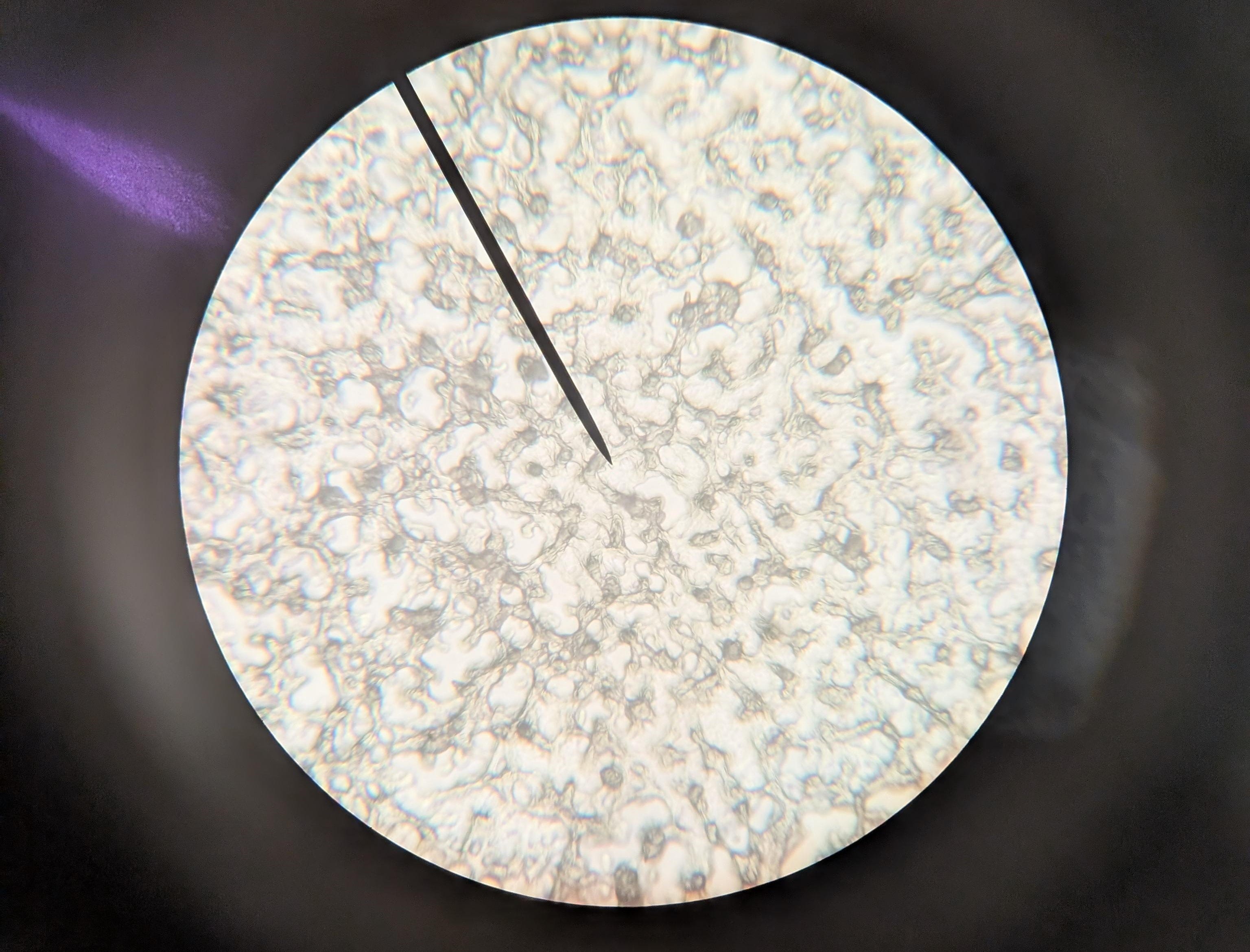
The first picture looks like these weird blobs, and look nothing like what I thought spores would be.
AsI turned the focus dial on the microscope, the shapes would morph and transform, as if I was seeing cross-sections of a much larger object.
I new microbiologists sometimes observe living microbes in water, so I decided to put a water drop on the spore and look at it again.
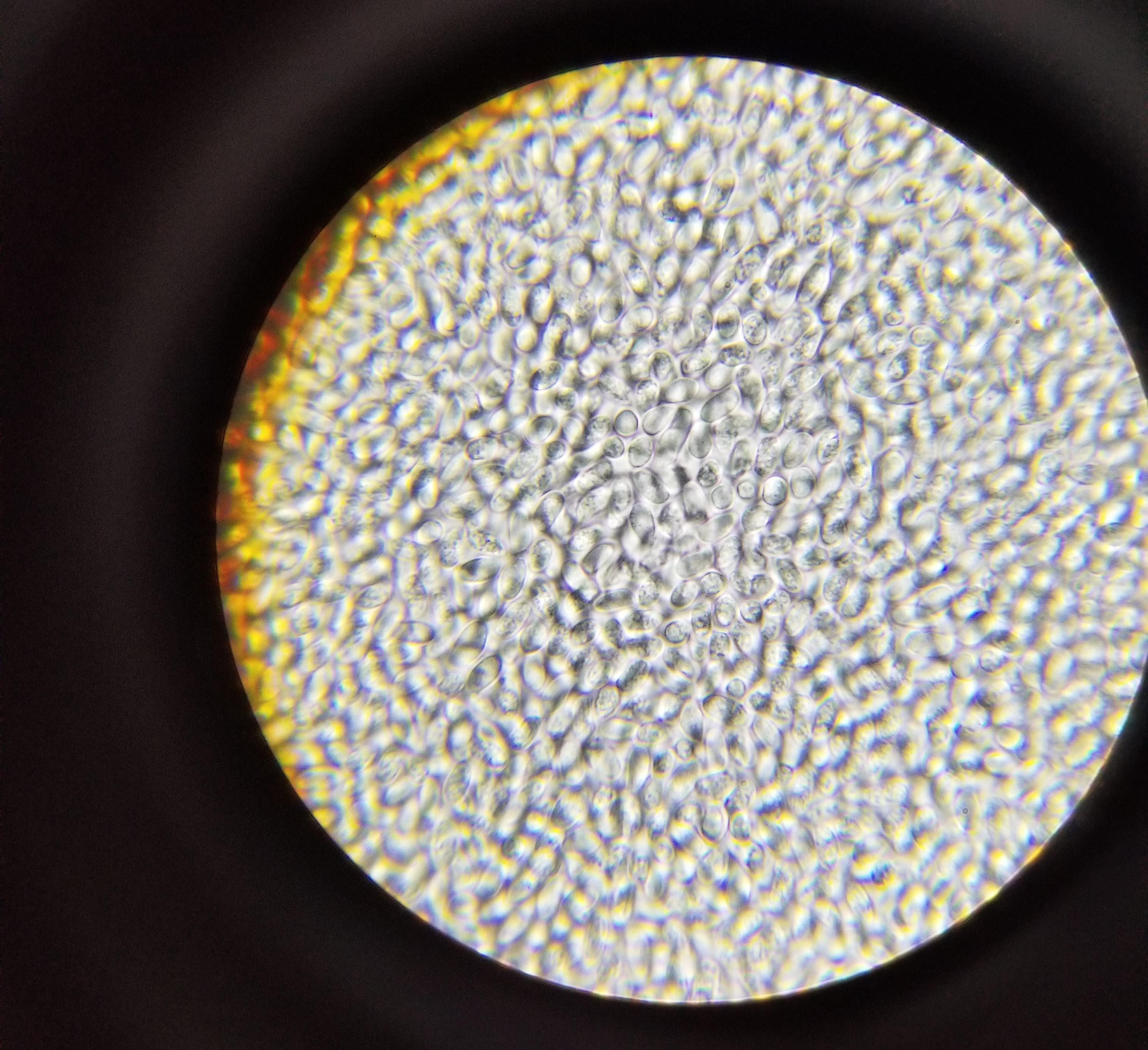
The second picture is what I saw next. Thousands of elongated spheres. Now that’s what I thought spores would look like! So what was going on in the first image?
What I learned was that spores stick to each other very well. So in the first image, I actually was seeing large towers made up of tens or hundreds of spores all sticking together.
When I added the water, the towers collapsed and the spores spread out evenly, occupying a thin layer of water.
That’s why it looks like there’s so many more in the second picture.
This is one of my favourite projects in classrooms and mycology clubs.
I love watching it blow kids and teacher’s minds when they first look into the microscope lens. For that, it makes an exciting capstone to any mycology module.
After learning about mycelium, inoculation, incubation, fruiting, we can eventually take a spore print and bring it into the microscope.